David Warner - A career to remember
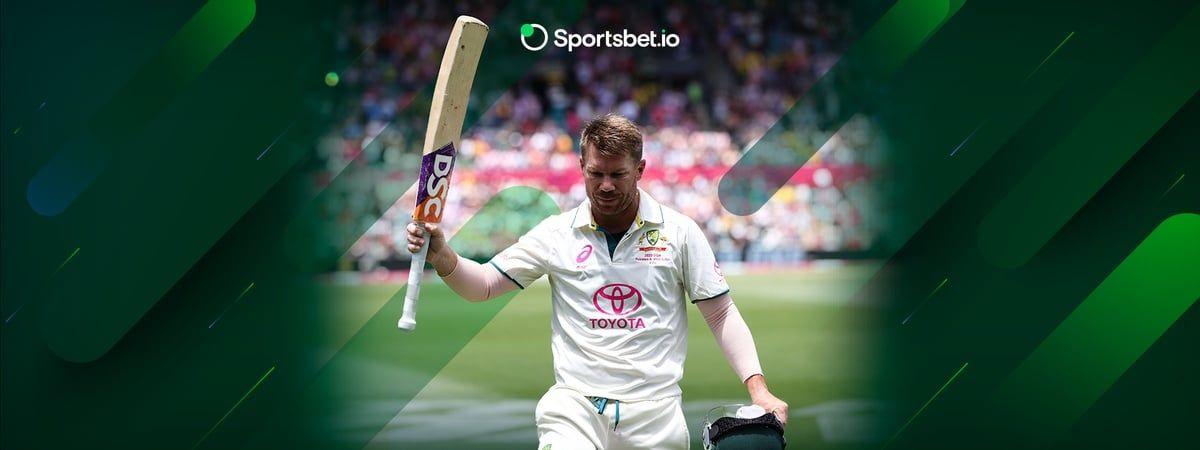
In a surprising move that left cricket fans around the world in awe, Australia's explosive opener, David Warner, recently announced his retirement from both One Day Internationals and Test cricket. At the age of 37, Warner has decided to prioritize spending more time with his family, marking the end of a remarkable international career. However, amidst the farewell, Warner left the door slightly ajar, expressing his willingness to participate in the 2025 Champions Trophy if needed. This decision raises questions about the evolving dynamics of international cricket, especially the growing allure of domestic T20 leagues.
Warner's ODI Legacy:
David Warner bows out of the 50-over format as a two-time world champion, having played a pivotal role in Australia's triumph at the ICC Cricket World Cup in India the previous year. His final ODI, the World Cup final against India, showcased his prowess, contributing significantly to Australia's historic win. With 6,932 runs at an impressive average of 45.30, including 22 centuries, Warner leaves a lasting legacy in ODI cricket. Only Ricky Ponting, among Australians, has scored more centuries in ODIs, solidifying Warner's status as one of the country's greatest limited-overs batsmen.
The Temptation of T20 Leagues:
Warner's retirement from ODIs and Tests comes with a warning about the increasing temptation for young cricketers to prioritize lucrative T20 leagues over the traditional longer formats. In a cricketing landscape dominated by IPL, BBL, and other domestic T20 competitions, the financial appeal of these leagues poses a threat to the allure of Test cricket. Warner's journey, from a T20 sensation to a Test mainstay, highlights the challenge faced by emerging players who may be drawn away from red-ball cricket due to the financial rewards offered by the shorter formats.
The Transition from T20s to Tests:
Warner's cricketing journey began with the excitement of T20 cricket, where he captured national attention. However, he successfully transitioned into the Test arena, proving his mettle in the red-ball format. His success story serves as an inspiration, but Warner acknowledges that the current generation of cricketers may find it increasingly difficult to resist the financial allure of T20 cricket. The transition from the shortest format to Tests requires not only skill but also a strong commitment to the traditional values of the game.
A Look Ahead:
The changing landscape of cricket, with the ever-growing prominence of T20 leagues, poses challenges for the future of Test cricket. Warner's retirement serves as a reminder of the delicate balance between embracing the evolving nature of the sport and preserving its rich traditions.
A Fitting Farewell:
In the end, he departed in the same manner he entered—swiftly. He hurriedly played shots that seemed unbelievable, showcasing skills you wouldn't think he possessed. The spectacle was not just entertaining and exciting; it brought smiles to faces, resonating throughout the SCG and households across Australia. This was precisely what he aimed to be remembered for.
In his Test career, often invoking the question, "Who writes his scripts?" his farewell seemed impeccably scripted. A tight run chase, a challenging pitch, the prospect of a series whitewash, a sunny day at the SCG, and a lively Saturday crowd all eyes were on him.
Stepping onto the field for his final innings alongside childhood friend Usman Khawaja, he forged a partnership with his most prolific ally in terms of average, Marnus Labuschagne. Crucially, he seized the stage for one last match-winning performance, doing so in a manner that only he could.
It felt like a compilation of David Warner's greatest hits, or rather, a seasoned pro-wrestler showcasing his repertoire move by move. The ultimate showman of Test opening delivered a performance reminiscent of the bang with which he burst onto the scene a decade ago.
His entrance into the arena involved a hug and a cuddle with Khawaja near the dugout, followed by the trademark sprint onto the field, complete with shadow-practised punchy drives. The routine continued with a glance to the heavens, a signature move of his. By the fourth ball he faced, Warner executed a classic move, opting for a second run where most would settle for a single. On the 12th delivery, a powerful square cut demonstrated his prowess. Two balls later, he revisited a routine from his early international cricket days—a smooth reverse sweep off off-spinner Sajid Khan, showcasing the familiar precision in his hands and feet positioning.
The final note of his career resonated at the SCG last Saturday—an echo destined to reverberate through career highlight compilations, anniversary retrospectives, and various forms of nostalgia and remembrance. It is a swan song that is immune to replication or substitution.
Over 13 Test summers in Australia, each time he astounded with something extraordinary, prompting the question, 'Who does that in Test cricket?' The resounding answer was always "David Warner does." Now, in his absence, as much as he will yearn for the days of donning the Baggy Green and participating in Test cricket, it is evident that Test cricket will miss him even more. He exited in the same distinctive manner in which he arrived.
Disclaimer:
The information provided by the above blog regarding Sportsbet.io is for general informational purposes only. While all information on this site is provided in good faith, we make no express or implied representations, warranties, or guarantees regarding the accuracy, validity, effectiveness, reliability, or completeness of any information or betting tips on this site, whether express or implied.