The most unexpected events in Papal Elections and what they mean for 2025
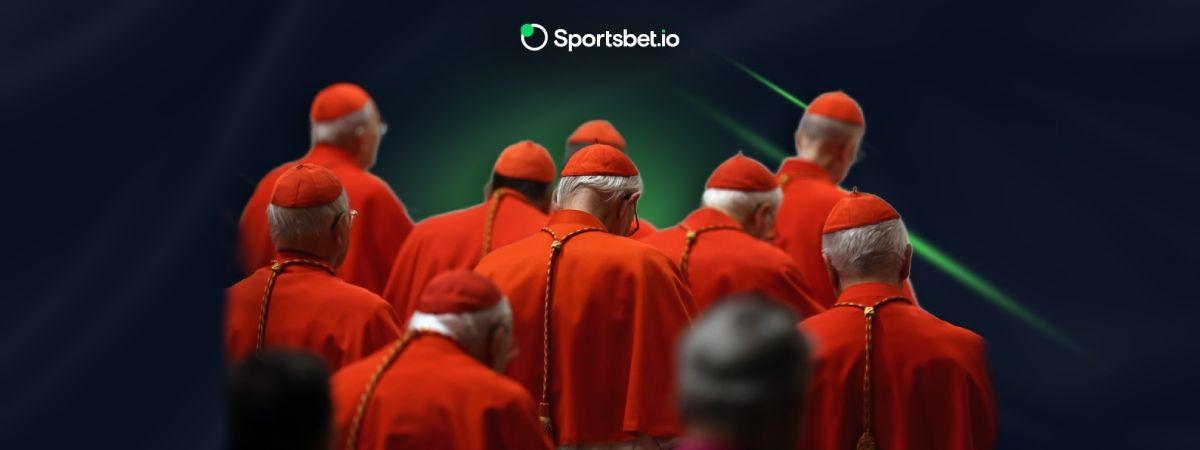
The Vatican’s conclave to elect a new pope will begin on May 7th, and the Catholic world is on edge. Will this go smoothly, or will 2025 join the long list of unusual papal conclaves? There is a lot to learn from the past, and you can use that to anticipate the 2025 papal elections.
Bet with crypto: Create a Sportsbet.io account now
The papal conclave is arguably one of the strictest electoral systems, even compared to presidential elections. However, the conclave wasn't always this strict; it went through centuries of revision, which explains why there are so many unusual papal elections in history.
Bet on who will be the next pope
The election that took almost three years (1268–1271)
There is no strict deadline for the cardinals to vote on a pope, but the papal election usually ends within days. That’s not always the case because the Vatican is prone to infighting when 133 cardinals are debating who should be the next pope. The worst example of a prolonged papal election occurred in the 13th century, eventually resulting in the selection of Pope Gregory X.
What was the problem?
There was no pope for two years and nine months. Reasons stated for the cardinals’ in-fighting were geopolitical, ideological, and conflict over reforms. Political and power dynamics got in the way of reaching a consensus.
How was it solved?
Pope Gregory X put an end to this in 1274 by implementing the conclave system, which persists today. He implemented a protocol that reduced the cardinals’ food supply, ensuring that the conclave reach a decision.
How will this affect the 2025 papal elections?
The Vatican made further changes to the conclave, and the 2025 papal elections will follow the modern rules outlined by Pope Benedict in 2007. It states that runoff ballots between the two leading candidates will be held if the cardinals are deadlocked after 33 or 34 votes.
How many betting rounds will there be in 2025? Bet now
The pope chosen under a king's influence (1305-1309)
The papal residence started on Roman soil and it persists to the present, but that changed in 1309 in a period called the Avignon Papacy.Shortly after Pope Benedict XI’s passing, King Philip IV the Fair of France manipulated the elections by making sure the majority of cardinals were French. Clement V also moved the papacy to France for political advantage.
What was the problem?
King Philip IV wanted a French pope loyal to him. The College of Cardinals elected Raymond de Got, who took the papal name Clement V. In the king’s name, the catholic church annulled Pope Boniface VIII’s bulls Clericis Laicos and Unam Sanctam. They also dissolved the Knights Templars under the accusation of heresy, and erased papal registers of all apostolic letters against the King.
How was this solved?
The Avignon Papacy under the French crown persisted until a bigger crisis took over the Christian world. During this time, the catholic church continued to be predominantly controlled by the French king and his agents. It had seven popes before the papacy returned to Rome in 1377. In 1378, the election of an Italian pope sparked the Western Schism or the great controversy of antipopes.
How will this affect the 2025 papal elections?
This was a dark time in the Catholic Church history, and it proved that external forces can control the papal elections. It required the influence of powerful elites who used the Church’s authority for their own political gain.Watch out for signs of strong political factions showing interest in the 2025 conclave.
The time when we had three popes (1378–1417)
The years 1378 to 1417 are the period in which there were three popes in the Roman Catholic Church. This time is also known as the Western Schism, and all three popes were recognised with their respective followings.
What was the problem?
The Western Schism happened shortly after the Avignon Papacy. There was an overwhelming demand among Romans for a Roman or Italian pope, resulting in Urban VI’s papacy.He was hostile towards the cardinals, forcing his opposition to flee to Anagni, where they elected a new pope.
Clement VII, elected by a group of dissenting cardinals in Anagni in 1378, was declared pope by those who argued that Urban VI’s election was invalid, having been conducted under duress from the Roman mob. This dispute initiated the Western Schism, during which rival papal lines were established in Rome and Avignon, each claiming legitimacy and supported by different European powers.
The schism continued for decades, with successive claimants on both sides. In 1409, in an effort to resolve the crisis, a group of cardinals from both factions convened the Council of Pisa and elected a third pope, Alexander V. However, since neither the Roman nor the Avignon pope agreed to resign, the result was not unity but three simultaneous papal claimants, further deepening the division within the Catholic Church.
How was this solved?
Alexander V was succeeded by John XXIII, who convened the Council of Constance in 1414, largely due to pressure from Holy Roman Emperor Sigismund. At the council, Gregory XII, the Roman pope, resigned, and the claims of the Avignon pope, Benedict XIII, were dismissed. The schism was officially resolved in 1417 with the election of Martin V, restoring a unified papacy in Rome.
See dynamic betting markets in Specials
How will this affect the 2025 papal elections?
The popes over the centuries iterated and reformed the Church’s protocols on unity and freedom from political entanglement. One of the most influential documents to help with this is the Apostolic Constitution Universi Dominici Gregis by Pope John Paul II. Cardinals took an oath to observe their rules and not support interference from secular authorities.
The pope who resigned—then things got messy (2013)
There hasn’t been a pope stepping down from power in over six centuries until Pope Benedict XVI did in 2013. His decision was primarily due to his advanced age and declining health, which made it increasingly difficult for him to fulfill the demanding responsibilities of the papacy.
Some sources also suggest that external pressures, including controversies surrounding the Church and its leadership, may have played a role in his decision. Benedict XVI was succeeded by Pope Francis, who was elected in the same year, becoming the first pope from the Americas.
What was the problem?
Resignation is always an option for popes, but no one has done it for a long time. The Vatican had no proper protocol for what happens after, resulting in a ‘two-pope problem’. Even if Benedict XVI stepped away from his duties, he is still symbolically a pope who might have opposing views with his successor.
To be clear, the Vatican will be following the elected Pope Francis, but the Church feared that Benedict XVI still influences the people and cardinals. If they have opposing ideologies, then it could fuel a conflict, challenging the Church’s unity.
How was this solved?
The Vatican mulled over how to act on Pope Benedict XVI’s resignation, and the solution they came up with was largely improvised. Their main goal was to avoid confusion and division within the Church, aiming to prevent a scenario like the Western Schism.
Benedict XVI was given the title ‘Pope Emeritus’, acknowledging him as a former pope without suggesting any ongoing authority. He remained silent on doctrinal disputes and refrained from public statements on Church policies, reinforcing his withdrawal from authority. It was a graceful and silent exit from the papacy, giving Pope Francis full authority as his successor.
How will this affect the 2025 papal elections?
Fortunately for the new pope of 2025, they don’t have to fear another two-pope problem happening soon. Future popes now have the option to resign of their own accord, following the precedent set by the late Pope Benedict XVI.
What should you expect in the 2025 papal elections?
The Vatican follows a strict set of rules that have always undergone iterations over the centuries, making 2025 the most rigid papal conclave to date. Chances for deadlocks and chaos will be minimal, and political interference won’t be tolerated. Tension can still appear in the 2025 papal elections, but at least there are protocols to meet such occasions.
Bet on the 2025 papal elections at Sportsbet.io
All this talk of papal elections is fun to explore because Sportsbet.io offers you the opportunity to bet on the next pope. You can wager on who will become the next pope or predict what the new papal name will be.
Markets for the 2025 papal elections are available on the Sportsbet.io mobile app, allowing you to place bets anytime, anywhere. Many of our promotions like risk-free bets and giveaways apply to bets on the papal election, too. Check them out for a top-tier betting experience at Sportsbet.io, your go-to crypto bookmaker.
See future fixtures and place your bets
DISCLAIMER
The information provided by the blog above on Sportsbet.io is for general information purposes only. All information on the Site is provided in good faith, however, we make no representation, warranty, or guarantee of any kind, express or implied, regarding the accuracy, adequacy, validity, reliability, or completeness of any information or betting tips on the Site.